
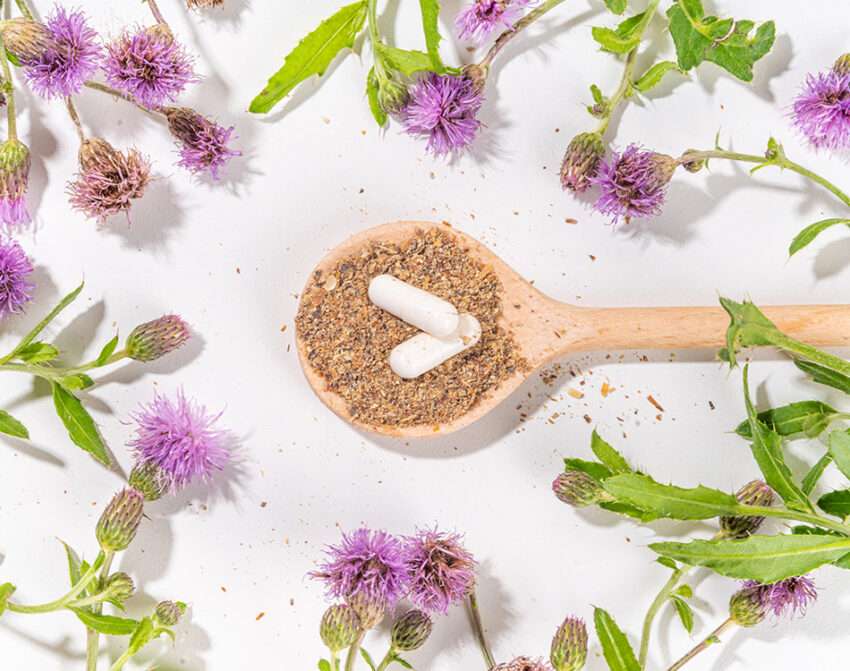

For women navigating hormonal changes, whether that’s the monthly fluctuations of your menstrual cycle, the transition of perimenopause, or the adjustments of menopause itself, milk thistle is a less mainstream supplement worth considering.
This ancient botanical is widely known for its ability to support liver function, but hat you may not know is that this organ plays a vital role in women’s hormonal health.
READ MORE | Support Liver Function and Natural Detoxification with Milk Thistle
Your Liver and Your Hormones
Your liver isn’t just the organ that filters toxins. It’s also your body’s main processing centre for oestrogen. Every month, your ovaries produce oestrogen, your liver metabolises it, and then your body excretes it.
But when your liver isn’t working optimally, whether because of stress, diet, age, or just the ordinary wear and tear of living, this hormonal recycling system can become sluggish.
And a sluggish liver metabolism can mean hormonal imbalances that ripple through your entire cycle. This is where the conversation around milk thistle for women begins.
The herb doesn’t directly alter your hormones. Instead, research suggests it may support your liver’s capacity to process and clear oestrogen more efficiently.
For some women, particularly those navigating perimenopause or menopause, this translates to noticeably smoother hormonal transitions.
“The theory is elegant,” says the research on this subject, “but the direct human evidence is still emerging.” Which is why it is important to think of milk thistle as a supportive tool, not a hormonal medicine.
If you’re dealing with diagnosed hormone-related conditions, it should sit alongside professional medical guidance, not replace it.
READ MORE | Don’t Let Perimenopause Pause Your Life: Thrive Through the Change
Milk Thistle and Hormone Metabolism
Milk thistle’s active compound, silymarin, works through a specific mechanism that matters for hormonal health. It supports liver function by acting as an antioxidant and anti-inflammatory, helping protect liver cells from the oxidative stress that builds up when your body is under strain.
Here’s the practical part: when your liver cells are protected and functioning well, they’re better equipped to handle the constant job of metabolising hormones.
A 2016 systematic review published in the Journal of Diabetes Research found that silymarin supplementation was associated with improved metabolic markers in people with type 2 diabetes. While this wasn’t specifically about hormonal health, it showed that the active compounds in milk thistle do influence how your liver metabolises and regulates substances in the bloodstream.
For women, this matters because better liver function theoretically means more efficient oestrogen clearance. Less circulating oestrogen can mean fewer heavy periods, reduced breast tenderness, and potentially easier transitions through perimenopause.
But direct clinical trials specifically measuring milk thistle’s effects on women’s hormonal symptoms are limited. Most of the research has focused on liver health in isolation.
So when you’re considering milk thistle for hormonal support, treat it as a complementary approach grounded in promising theory, not a guaranteed fix.
Three windows where milk thistle may help women include:
- The Menstrual Cycle: Managing Monthly Hormonal Fluctuations
Your menstrual cycle isn’t just about your reproductive system – it’s a whole-body hormonal orchestra, and your liver is the conductor’s assistant.
In the luteal phase (the second half of your cycle, after ovulation), your body produces more progesterone to prepare for either menstruation or pregnancy. This phase can bring symptoms like bloating, mood changes, and breast tenderness—what many women call PMS. While these are normal, they can be intensified by sluggish hormonal metabolism.
By supporting your liver’s ability to efficiently process and clear hormones, milk thistle may help reduce the severity of these cyclical symptoms. Some women report noticing the difference within 4 to 6 weeks of consistent use. Others see changes over months. The variation in response is likely due to differences in baseline liver function, diet, stress, and individual chemistry.
- Perimenopause: The Long Transition
Perimenopause is the 4 to 10 years (yes, that long) leading up to menopause, when your ovaries begin producing less oestrogen and your hormones become increasingly erratic. Hot flushes, night sweats, mood swings, brain fog—these aren’t bugs in your system, they’re features of a major hormonal transition.
One reason perimenopause can feel so chaotic is that your liver is suddenly dealing with wildly fluctuating oestrogen levels. Your body hasn’t yet adapted to the new baseline.
Milk thistle won’t stop this transition or prevent hot flushes, but by supporting your liver’s processing capacity, it may help smooth some of the rougher edges.
Research on milk thistle and perimenopause specifically is sparse, which is why this remains a theoretical benefit grounded in how the ingredient works rather than direct clinical evidence. If you’re considering milk thistle during this phase, combine it with other evidence-based strategies: consistent sleep, regular movement, dietary support, and professional guidance if symptoms are severe.
- Menopause: Liver Support as Part of Broader Wellness
Once you’ve crossed into menopause (defined as 12 months without a period), your hormonal landscape changes permanently. Oestrogen drops significantly, and your liver’s job shifts—it’s no longer processing the monthly cyclical surge of hormones.
But menopause brings its own challenges: bone health becomes more vulnerable, cardiovascular risk shifts, skin and hair change, and many women experience ongoing hot flushes and night sweats for years.
Milk thistle doesn’t address these directly: it supports your liver’s general capacity to process the hormones that are still circulating and support overall metabolic health during a phase when metabolic support matters more than ever.
Beyond Hormones: Other Reasons Women Take Milk Thistle
While hormonal support is the draw for many women, milk thistle offers other potential benefits worth mentioning.
- Antioxidant and anti-inflammatory support during high-stress periods: Women often carry higher baseline stress loads, juggling work, family, health responsibilities, caregiving. Milk thistle’s antioxidant activity may help protect liver cells from the oxidative damage that chronic stress accelerates.
- Supporting digestive comfort: Many women notice their digestion shifts through their cycle. The luteal phase can bring bloating and sluggish digestion. Milk thistle’s traditional role in supporting bile production and gentle digestive function may help ease these monthly changes. This is a supportive benefit, not a treatment for diagnosed digestive conditions.
- Energy and metabolic support: Because your liver is central to energy production and metabolism, supporting liver function can indirectly support your overall energy levels – something many women report needing more of, particularly through perimenopause.
How to Use Milk Thistle
If you’re considering milk thistle supplement, most clinical studies use standardised extracts delivering 200 to 400 mg of milk thistle per day, typically split into one to three doses.
Look at the silymarin content on the label – this is the active compound you’re after, not the raw plant weight. A product like Biogen Milk Thistle delivers 200 mg of silymarin per capsule, which aligns with research doses.
Take it with a meal containing some fat (olive oil, nuts, avocado, animal protein). This supports absorption and reduces the chance of mild stomach upset. Morning or evening doesn’t matter; consistency matters more than timing.

Author: Pedro van Gaalen
When he’s not writing about sport or health and fitness, Pedro is probably out training for his next marathon or ultra-marathon. He’s worked as a fitness professional and as a marketing and comms expert. He now combines his passions in his role as managing editor at Fitness magazine.











Leave a Reply